Requests per second
Observed in measured CacheDB workloads.
 houdata.
CacheDB by houdata.
CacheDB sits between your application and database, accelerating repeated reads while keeping invalidation controlled and visible.
Console preview. Video coming soon.
Works with critical data systems
Measurable improvement
CacheDB is designed for teams that need a credible performance path without a rewrite of the systems they already trust.
Observed in measured CacheDB workloads.
For cacheable, read-heavy traffic with an appropriate policy.
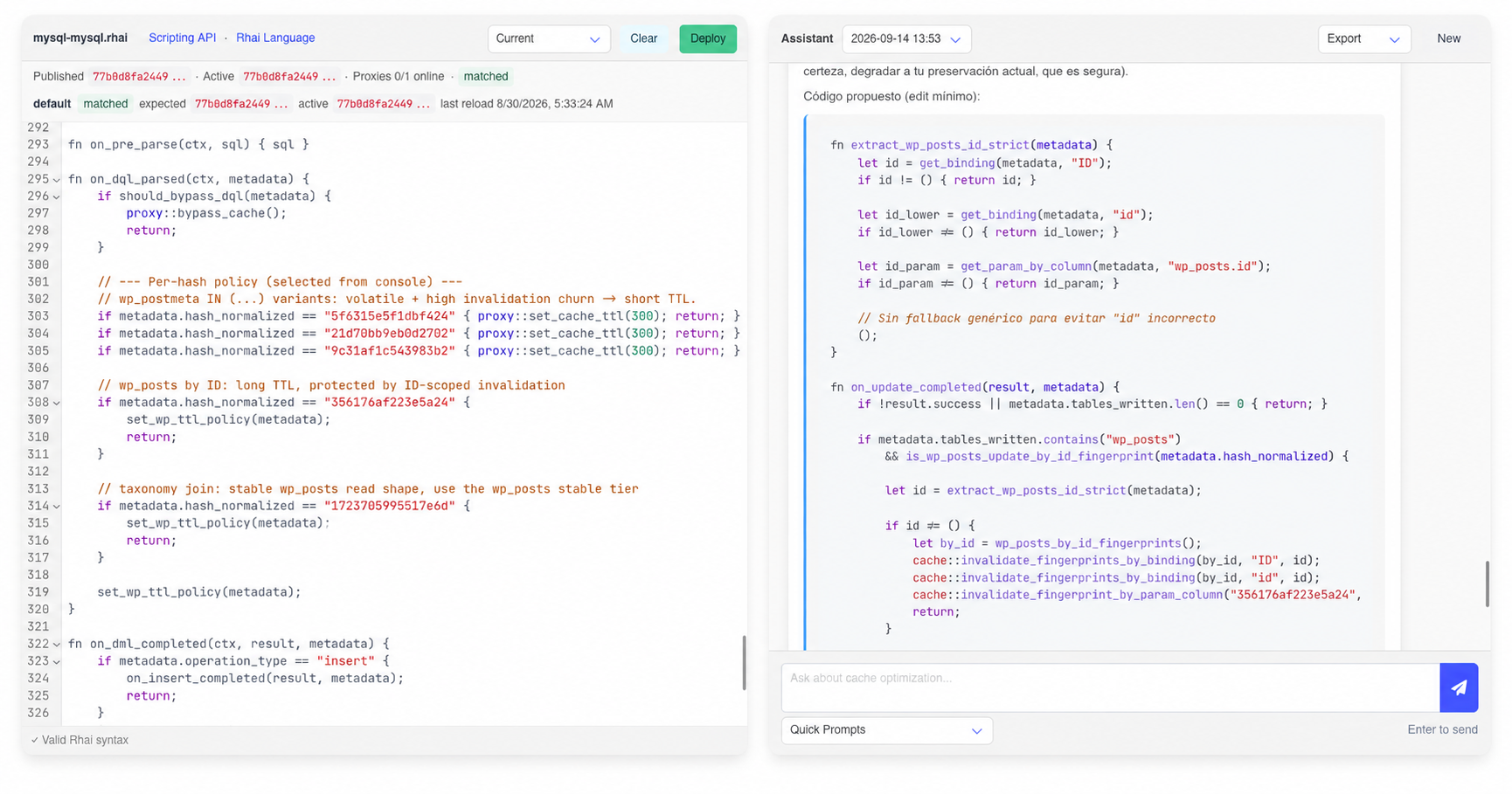
Analyze proxy signals and propose query-specific cache actions for review.
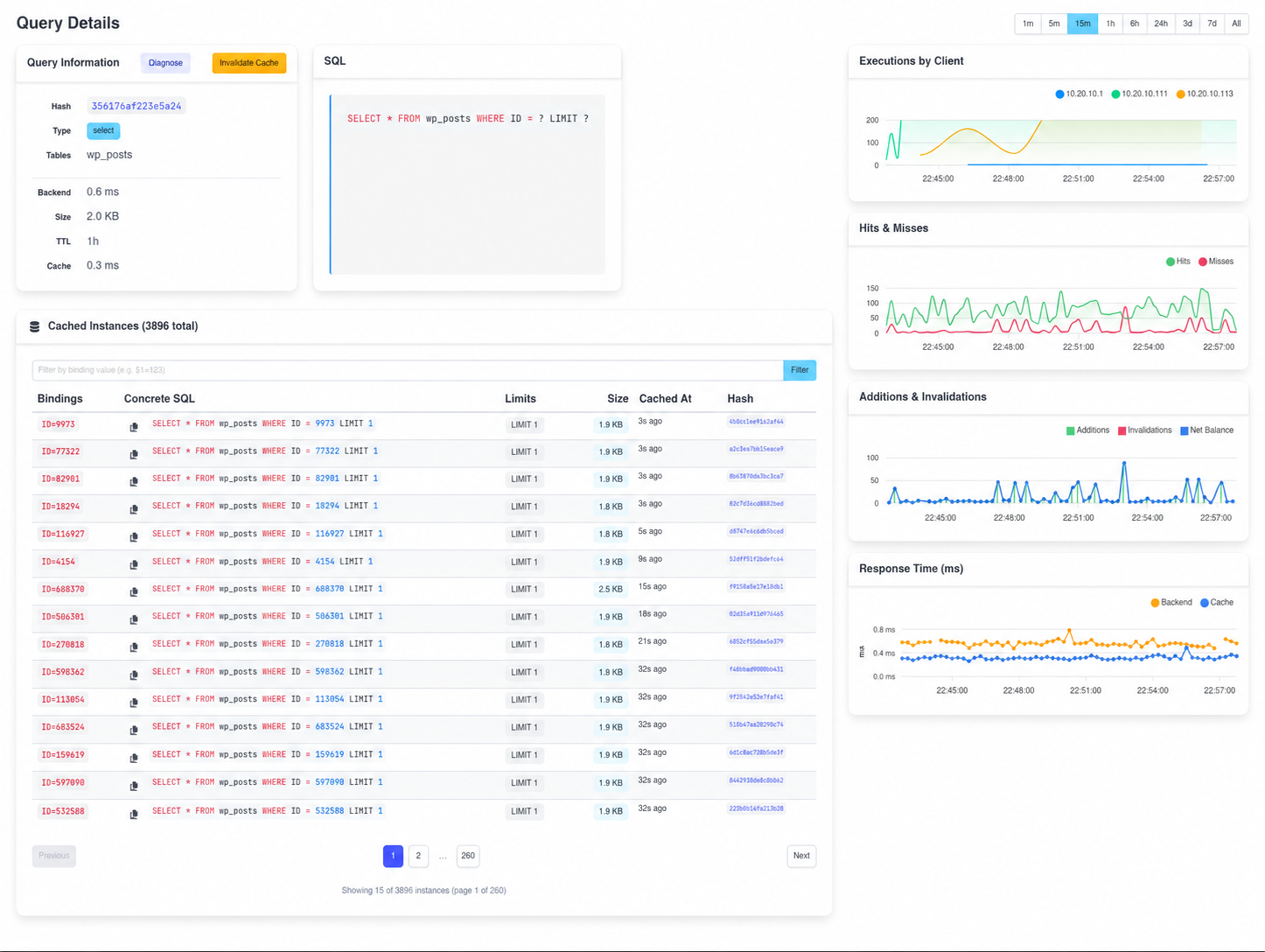
Inspect query patterns, QPS, cache outcomes, latency and invalidations.
Results depend on workload, database, cacheability, policy, and infrastructure. Request the evaluation methodology.
Architecture
CacheDB answers repeated reads from Redis when safe, routes misses to the source of truth, and makes the resulting behavior observable.
Explore the technical architecture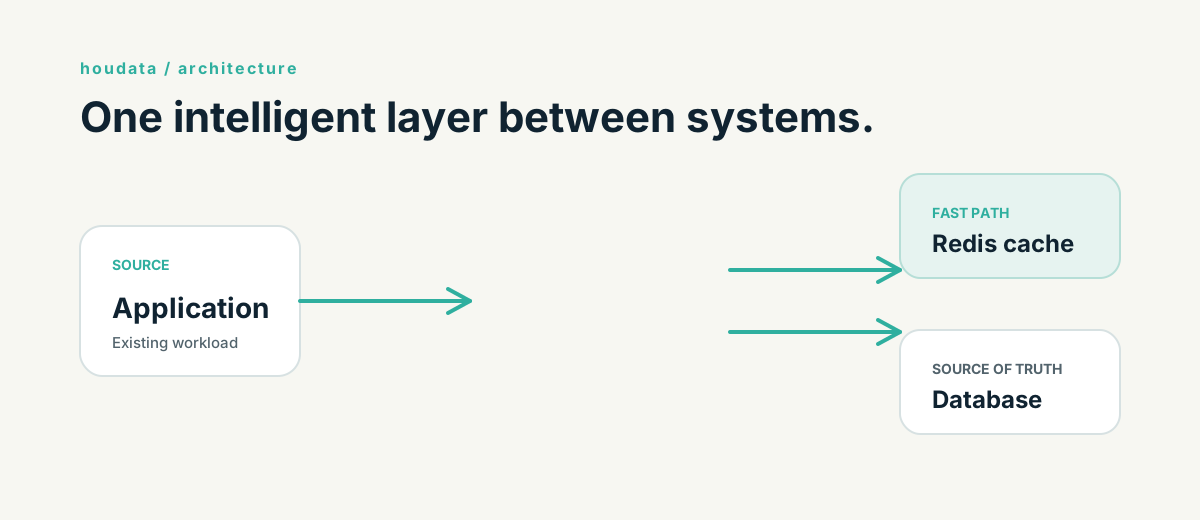
Traffic-aware cache policy
CacheDB combines programmable hooks with an AI assistant that studies the operational context already visible at the proxy.
Analyze cache metrics, query patterns, invalidation relationships and runtime signals to find inefficient behavior.
Generate a focused Rhai candidate for TTLs, cache eligibility, or selective invalidation instead of a generic recommendation.
Validate candidates with the production engine without deploying them. Operators remain responsible for review and activation.
Enterprise-ready operations
CacheDB makes performance policy an operational system: observable, attributable, integrated with identity, and designed for resilient deployments.
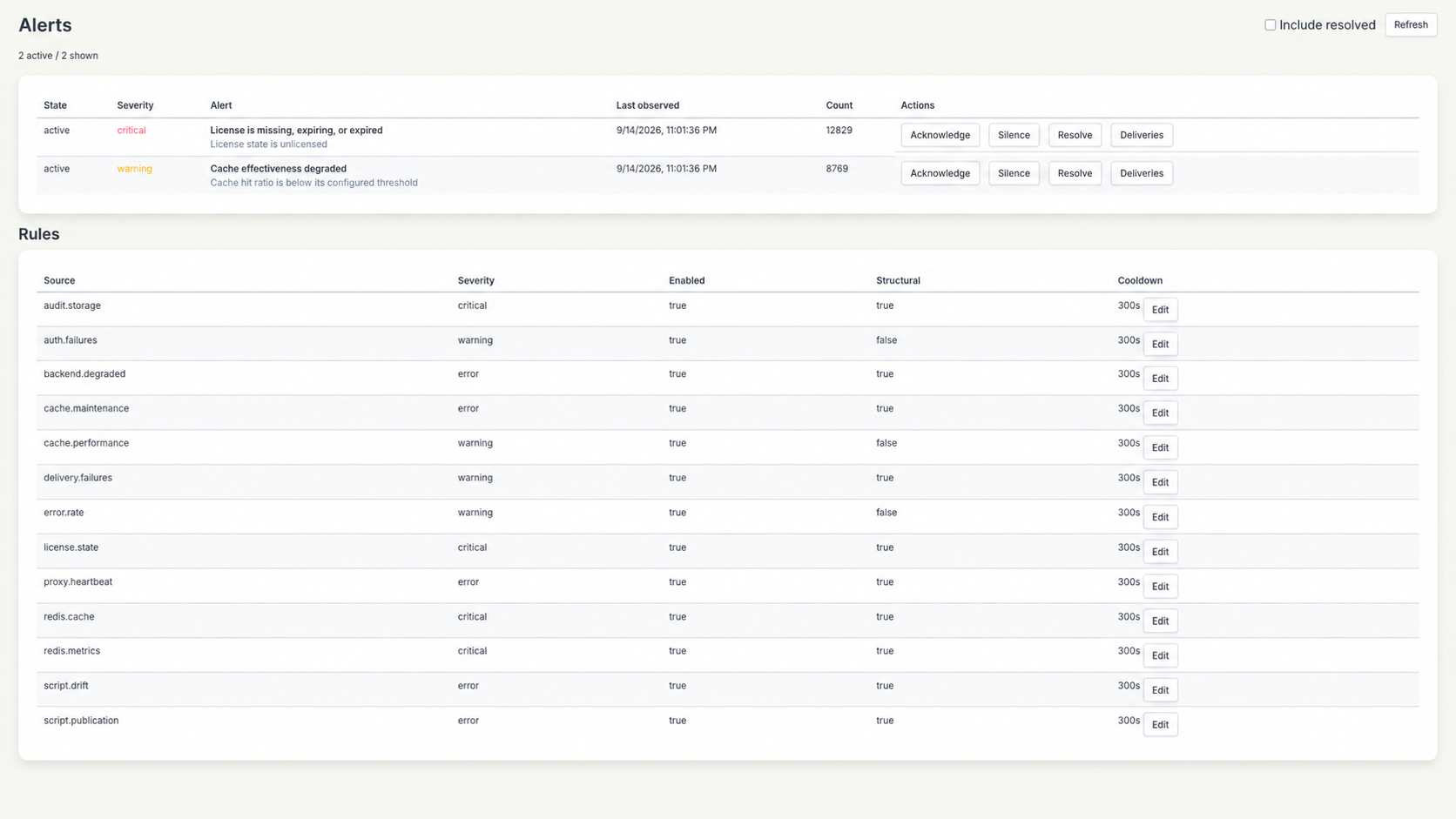
Evaluate and retain operational alerts, then deliver them through configured SMTP or webhook channels.
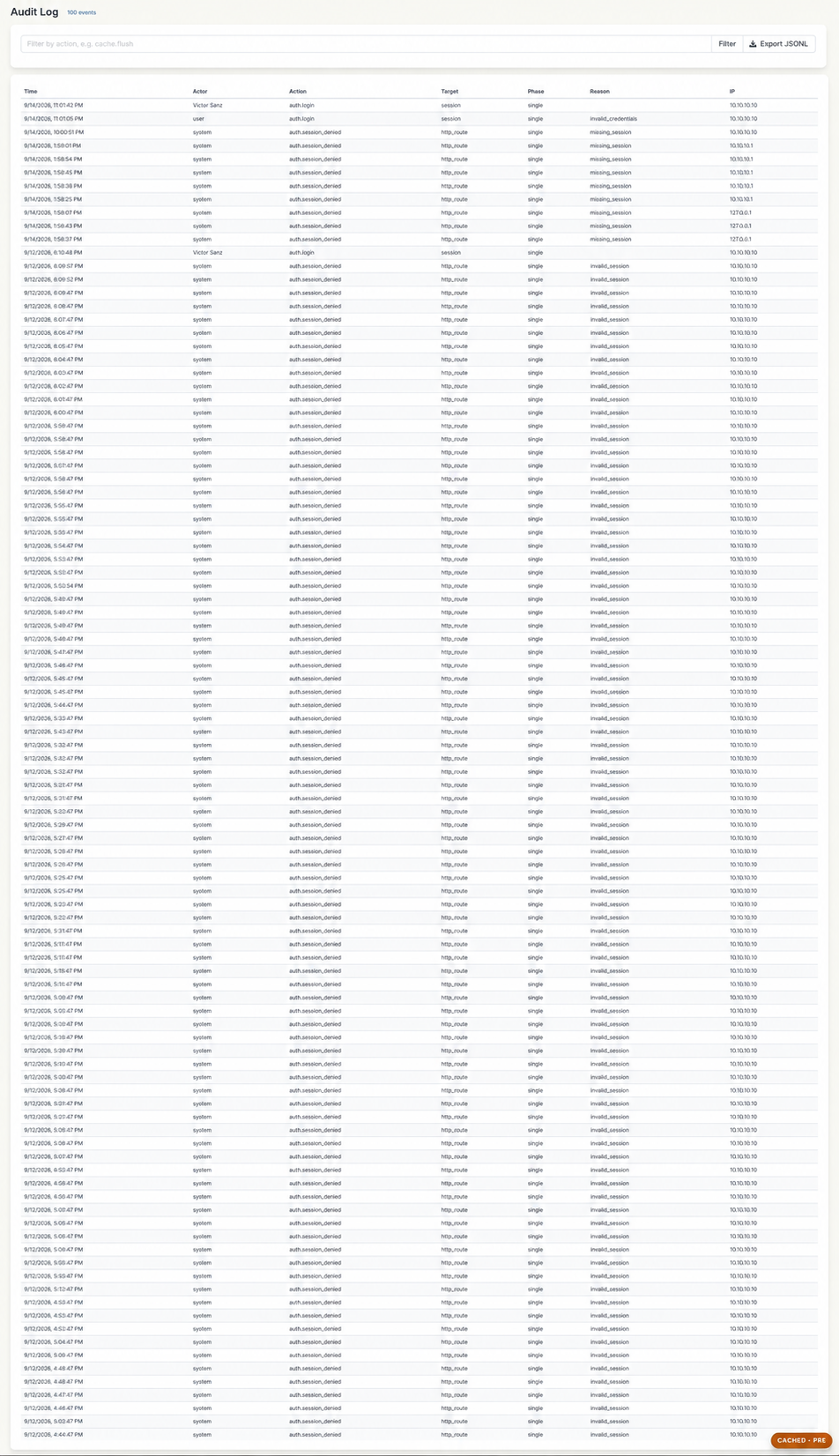
Record protected actions and policy deployments in an append-only audit history with export support.
Run multiple proxy instances and use Redis Sentinel so failover is discovered without proxy restarts.
Use standards-based OIDC, group-to-role mappings, and a controlled emergency-access path for the console.
Evidence for operators
CacheDB exposes the operational context needed to review cache outcomes and tune explicit policy with confidence.
A controlled evaluation
Start with the workload you already operate. Validate the result with evidence before broadening the deployment.
Identify repeated reads, load patterns and current constraints.
Model cache policy, TTLs and invalidation boundaries.
Introduce CacheDB into a controlled path without rewriting application logic.
Compare latency, hit ratio and database load against the baseline.
Technical documentation
Technical conversation
Tell us about the database, workload and performance constraint you are working with. We will start with a focused, evidence-led discussion.